Shin Hotaka Ropeway from Takayama: Fares, Bus, Tours (2026)
By Takayama Gifu Team · Updated · 13 min read
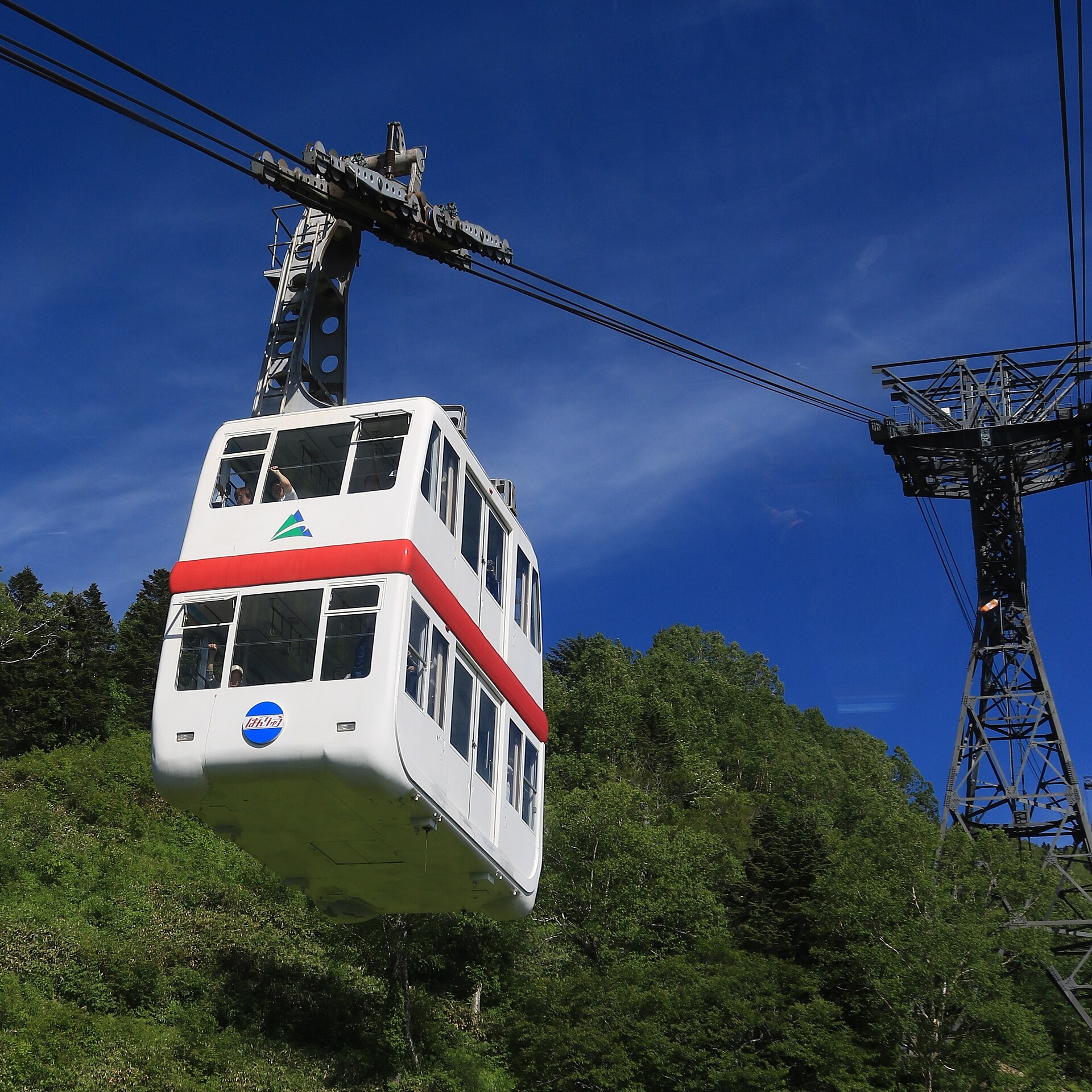
The Shin Hotaka Ropeway sits inside Takayama City, at the top of the Okuhida valley, so you don’t need a tour to reach it. A Nohi bus leaves the Takayama Nohi Bus Center about once an hour, no reservation, ¥2,200 one way, and roughly 1 hour 40 minutes later you’re at the bottom station. A return ticket on the two ropeways is ¥3,800, bought at the station. That’s the cheap way, and for most people the right one. A tour earns its price when it folds Hida Folk Village and the limestone cave into the same day, when you want Kamikochi on the same trip in season (it’s closed from 16 November to mid-April), or when you’d rather not watch bus times. Everything below was checked on 4 November 2026.
Quick answer
| Nohi bus plus a ticket | Nohi’s web-only plan | Join-in day tour | Two-day pass plus ropeway | |
|---|---|---|---|---|
| Cost | ¥4,400 bus return plus ¥3,800 ropeway, ¥8,200 | ¥8,500 adult, ¥4,300 child | Per person; today’s price on the listing | ¥7,700 adult, ¥3,850 child (two days) |
| Day | First bus 6:00, last bus straight back to Takayama 16:55 | Any bus on two days, ropeway, lunch coupon, one onsen bath | About 8 to 9 hours from Takayama Station | Bus hopping across the Okuhida villages on both days |
| Best for | Almost everyone | One-day visitors who want a bath and lunch sorted | Folk village, cave and ropeway in one go; Kamikochi in season | Anyone staying a night in Okuhida |
| Weak point | You keep an eye on the hourly timetable | Book by 16:00 three days ahead, web only | Fixed timings, short time at the top | Only pays if you ride the bus more than once |
Fares, hours and the two ropeways
The ride is two ropeways with a short walk between them. The first climbs from Shin-Hotaka Onsen station (1,117 m) to Nabedaira Kogen (1,305 m) in about five minutes; you walk across to Shirakabadaira station (1,308 m), where the second ropeway’s double-decker car takes about seven minutes up to Nishihotakaguchi at 2,156 m. The operator calls it Japan’s only two-storey gondola; its history page dates the first double-decker to the 1998 renewal of the second line, with new cars in 2020. The whole line is about 3,200 m long.
| Ticket (adult / child) | Return | One way |
|---|---|---|
| Both ropeways, Shin-Hotaka Onsen to Nishihotakaguchi | ¥3,800 / ¥1,900 | ¥2,400 / ¥1,200 |
| First ropeway only | ¥700 / ¥350 | ¥500 / ¥250 |
| Second ropeway only | ¥3,700 / ¥1,850 | ¥2,300 / ¥1,150 |
Child fares are for primary-school ages; preschoolers ride free with an adult. Luggage over 6 kg needs an excess ticket, ¥1,000 return or ¥500 one way for the second ropeway. A return ticket’s outbound half is valid only on the day it’s issued, but the return half is good for three days, which is how an overnight at the top-station area works. The first ropeway leaves on the hour and half hour, the second at :15 and :45, year-round; the operator warns that strong wind and scheduled inspections stop the cars, and its homepage shows live status and the summit temperature each morning. For hours, the Okuhida tourism association lists 8:30 to 16:00 from April to November and 9:00 to 15:30 from December to March; the exact first and last cars for your date are on the operator’s seasonal timetable (an image on its fares page). No partner sells the ticket, so buy it at the window, or use the operator’s own web advance ticket.
At Nishihotakaguchi the roof is the observation deck, with a restaurant and shop on the second floor and the Itadaki-no-mori forest trail outside. The view earned two stars in the Michelin Green Guide Japan: Nishi-Hotaka, Yari-ga-take and Kasa-ga-take in a ring around you. Count on two to three hours at the ropeway: the cars, the walk at the top and a coffee.
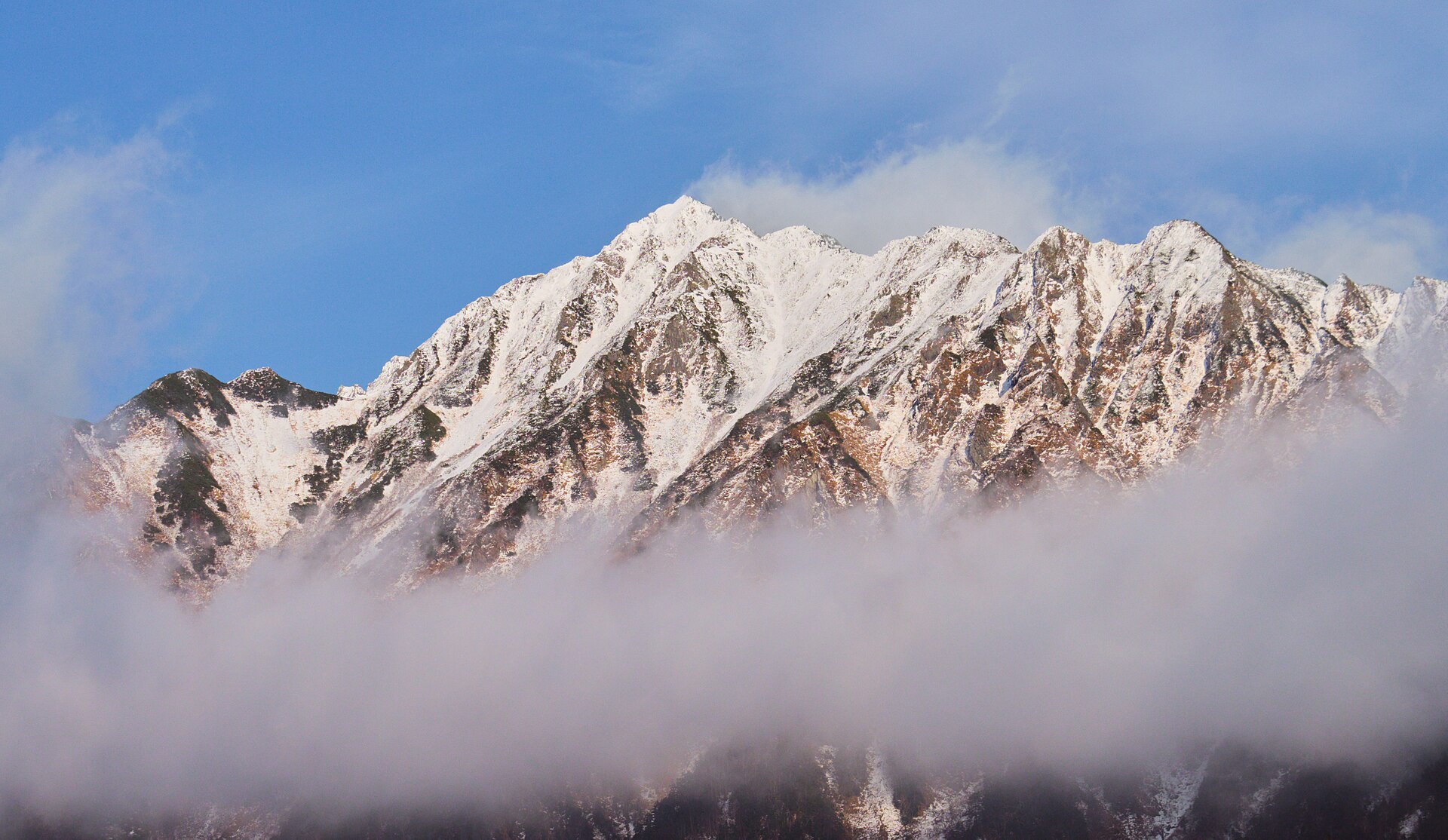
The Hotaka range above a sea of cloud from Shin-Hotaka, November 2025. Photo: lumoplank, CC0, via Wikimedia Commons.

From Takayama by Nohi bus
The Takayama to Shin-Hotaka line is a plain route bus, so there’s nothing to reserve from Takayama or Hirayu: buy the ticket at the bus centre window or machine, or pay on board if they’re closed. It’s ¥2,200 one way to the Shinhotaka Ropeway stop (¥1,100 child) and ¥1,600 to Hirayu Onsen (¥800). Nohi’s English page counts about 15 departures a day, roughly hourly, first at 6:00 and last at 18:40, and the bus runs through Hirayu without a change. Allow about 1 hour 35 to 1 hour 45 minutes depending on the run: the Ministry of the Environment’s 2026-27 Shinhotaka route timetable shows, for example, 10:40 from Hirayu arriving 11:16 at the ropeway, and 9:16 from the ropeway arriving 11:01 at Takayama.
The return matters more. The last bus from the ropeway that runs straight through to Takayama leaves at 16:55 and arrives at 18:31; the 17:55 and the April-to-November 18:35 end at Hirayu. Heading to Kamikochi? Get off at Hirayu and change to the shuttle.
The passes that beat a plain return. Nohi’s Takayama and Shinhotaka 2-day free ticket is ¥4,400 (¥2,200 child), exactly a return fare, so every stop at Hirayu, Fukuji, Shin-Hirayu or Tochio on the way costs nothing extra. The Okuhida Marugoto Value Ticket bundles that pass with a ropeway return for ¥7,700 (¥3,850), ¥500 under buying both, or ¥8,200 for three days; the Kamikochi version adds the Hirayu to Kamikochi shuttle for ¥10,500 (¥5,250), sold only while Kamikochi is open, 17 April to 15 November in 2026. Nohi’s Area Free Ticket, ¥8,000 for three days, covers this line as well as the non-reserved Shirakawa-go runs, the trade-offs of which are in the Shirakawa-go post. And Nohi’s own web-only plan, “Shinhotaka Ropeway with lunch and spa”, is ¥8,500 adult and ¥4,300 child for the two-day bus pass, the ropeway return, a ¥1,000 meal coupon and one onsen bath, daily to 31 March 2027 except on ropeway suspension days; it departs from bay 5 and must be booked and paid by card on the web by 16:00 three days before. All the bus centre’s bays and the city loops are on the getting-around page.
Driving. The ropeway’s car parks take about 160 cars at Shin-Hotaka Onsen and about 550 at Nabedaira (closed in the snow season, early November to late April), ¥800 per six hours, no reservation. Station rental desks fit snow tyres from December to March; if you fly into Chubu Centrair and drive up, compare on DiscoverCars at Chubu Centrair. Kamikochi is closed to private cars all year, so a car still means the Hirayu shuttle for that leg.
Tours that include the ropeway
From Takayama, with Kamikochi. Klook’s Alpine Splendor day tour from Takayama is the join-in bus that pairs the ropeway with a walk in Kamikochi, starting at Takayama Station. It only makes sense while Kamikochi is open, so from mid-April to 15 November; outside those dates the listing shows no departures.
From Takayama, year-round sights. Viator’s 1-day tour from Takayama: Hida Folk Village, caves and ropeway meets at 9:00 outside the JR Takayama Station gates, runs about eight hours with an English-speaking guide and a group of at most 20, and includes transport, Hida no Sato, the Hida Great Limestone Cave and the ropeway return; lunch is not. This is the one that justifies a tour on a day the bus could do: three places that are awkward to string together on public transport.
From Nagoya. Klook’s Shinhotaka Ropeway day trip from Nagoya meets at Nagoya Station at 8:15 and includes the limestone cave and lunch. From Osaka or Kyoto, Klook’s Shinhotaka Ropeway and Takayama bus tour from Osaka or Kyoto boards at Kyoto Station or Shin-Osaka. Both are long days; the tours hub groups everything by starting city.
Private. Private driver-guide days to the ropeway and Kamikochi exist on the partner sites, but none of the listings we found could be confirmed live on 4 November 2026, so we link none here; the tours hub shows them as they’re verified. Partner prices move with the date and group size, so we print none: the live listing has today’s.
Winter at 2,156 m
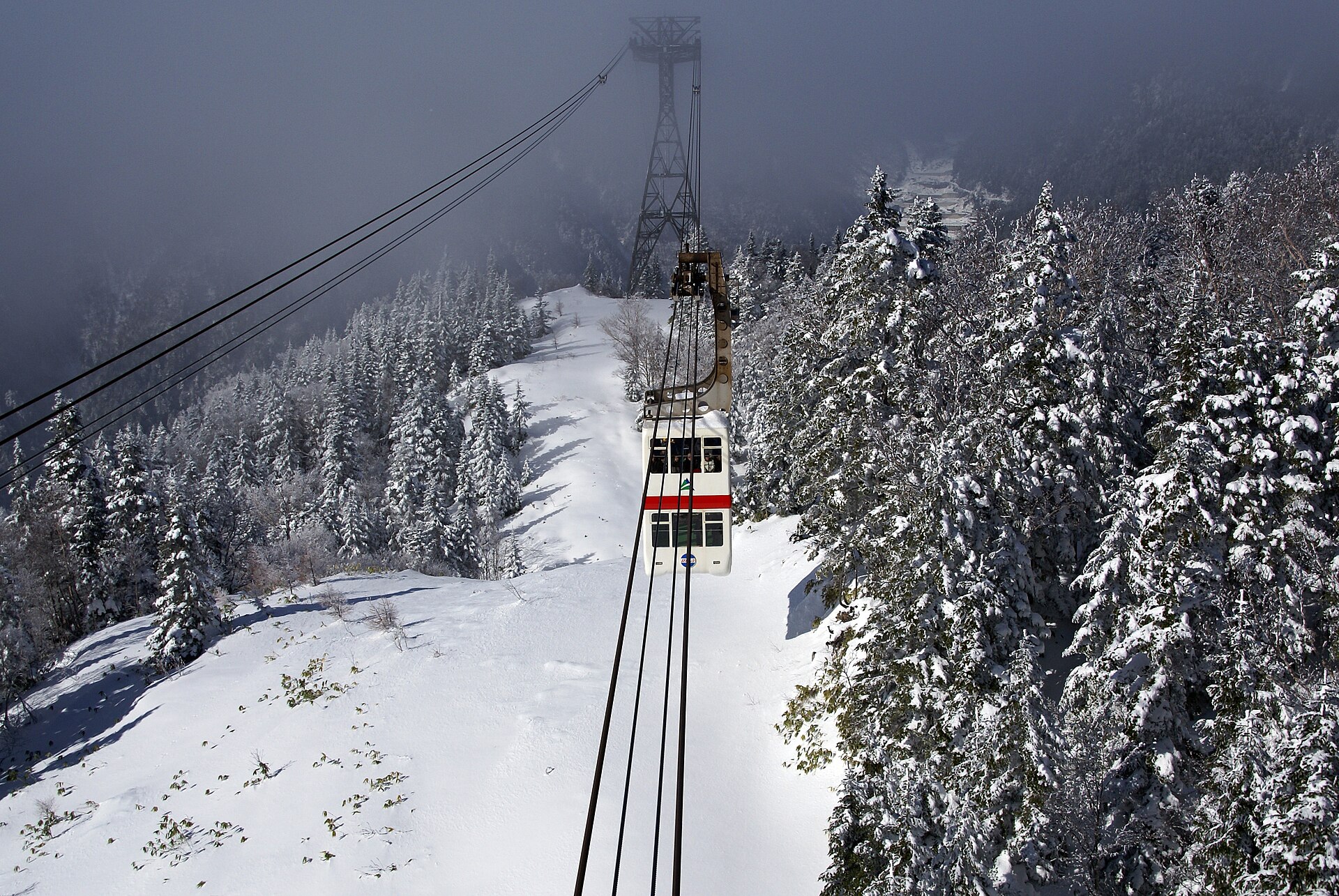
A ropeway car over snowbound conifers, November 2007. Photo: 663highland, CC BY 2.5, via Wikimedia Commons.

The ropeway runs all winter; it’s the bus to Kamikochi and the mountain passes that close, not this. From December to March the Okuhida association lists 9:00 to 15:30, so the day is short: take a morning bus. The operator’s FAQ puts the top station 6 to 10°C colder than the bottom, and on the morning of 4 November its homepage read 1°C and clear at the summit. In deep winter expect well below freezing with wind; boots with grip, gloves and a windproof layer are the kit, and strong wind is the usual reason the cars stop, so check the homepage before you board the bus. From late December into March, snowfall permitting, the staff cut a snow corridor through the Itadaki-no-mori forest beside the top station, about 240 m long with walls up to about 3 m, free beyond the ropeway fare. In January it pairs with Takayama’s own winter show, the Hirayu Waterfall ice festival, on the same bus line; dates are on the events calendar.
Add an Okuhida onsen
The bus threads five onsen villages on its way up: Hirayu, Fukuji, Shin-Hirayu, Tochio and Shin-Hotaka itself, and with the two-day ticket every stop is free. Hirayu is the natural pairing: an hour from Takayama, where the Kamikochi shuttle leaves, with day-use baths and ryokan within a walk of the terminal. Nohi’s web plan includes one bath; the relax hub lists day-use baths as we verify them, and the stay hub the ryokan. For a night in the valley, search Okuhida Onsen on Agoda or Takayama on Booking.com and filter for Okuhida.
Book the trip
- Three sights in one day, no bus timetable: Viator’s Hida Folk Village, caves and ropeway day.
- Ropeway plus Kamikochi, mid-April to 15 November: Klook’s Alpine Splendor from Takayama.
- Driving yourself: a station rental from the getting-around page, or DiscoverCars at Centrair.
- Starting in Nagoya, Osaka or Kyoto: the Klook bus tours above, or come to Takayama first (the getting-here page) and do it from here for a third of the price.
- Everyone else: the ¥2,200 Nohi bus with the ¥3,800 ticket at the station, or the ¥7,700 Marugoto ticket if you’ll sleep in Okuhida, booked with a ryokan from the stay hub, Agoda or Booking.com.
FAQ
How much is the Shin Hotaka Ropeway? ¥3,800 return or ¥2,400 one way for an adult on both ropeways; children ¥1,900 and ¥1,200; preschoolers free. Bags over 6 kg pay ¥1,000 return.
How do I get there from Takayama without a tour? The Nohi bus from the Takayama Nohi Bus Center, ¥2,200 one way, about hourly from 6:00 to 18:40, no reservation; about 1 hour 40 minutes.
What’s the last bus back? 16:55 from the ropeway, arriving Takayama 18:31. Later buses (17:55, and 18:35 from April to November) stop at Hirayu.
Can I buy the ropeway ticket online or through a partner? No partner sells it. Buy it at the station, or on the operator’s own web advance-ticket page.
Does it run in winter? Yes, year-round, with shorter hours from December to March (9:00 to 15:30 per the Okuhida association) and suspensions in strong wind. The snow corridor at the top runs from late December into March.
Can I combine it with Kamikochi? Only while Kamikochi is open: 17 April to 15 November in 2026. Change at Hirayu for the shuttle (¥1,500 one way, ¥2,800 return, about 30 minutes), or take the Klook join-in tour above.
Is there a pass? The ¥4,400 two-day bus ticket equals a return fare; the ¥7,700 Okuhida Marugoto Value Ticket adds the ropeway for ¥500 less than buying both. The JR Pass covers none of it.
Sources
Checked on 4 November 2026.
- Shinhotaka Ropeway, 営業案内・料金 (fares ¥3,800 / ¥1,900 return and ¥2,400 / ¥1,200 one way, first-only ¥700 / ¥500, second-only ¥3,700 / ¥2,300, “第1ロープウェイ 毎時00分・30分発”, “第2ロープウェイ 毎時15分・45分発”, year-round, “天候不良・定期点検の場合、運休することがあります”): shinhotaka-ropeway.jp; the English fares page (excess baggage over 6 kg ¥1,000 / ¥500, preschoolers free, child fares for elementary ages): shinhotaka-ropeway.jp/en
- Shinhotaka Ropeway, 施設案内 (station elevations 1,117 m, 1,305 m, 1,308 m and 2,156 m; rooftop observatory, 2F restaurant and shop, 頂の森; about 550 cars at Shirakabadaira): shinhotaka-ropeway.jp; 新穂高ロープウェイについて (“日本で唯一の2階建てゴンドラ”, Michelin Green Guide two stars, 槍ヶ岳・穂高岳): shinhotaka-ropeway.jp; ロープウェイの歴史 (opened 15 July 1970, “第2ロープウェイリニューアル 日本初の2階建てゴンドラ” in 1998, the 2020 renewal): shinhotaka-ropeway.jp; よくある質問 (“西穂高口駅と新穂高温泉駅とでは気温が約6~10℃違います”, strong-wind suspensions, return half valid three days, the WEB前売券 link): shinhotaka-ropeway.jp; 駐車場・アクセス (約160台 and 約550台, 乗用車 800円/6時間): shinhotaka-ropeway.jp; the homepage’s summit reading on 4 November 2026 (晴れ, 1℃, both lines 営業中): shinhotaka-ropeway.jp
- Okuhida Onsengo Tourism Association, Shinhotaka Ropeway (English; 3,200 m, 2,156 m, April to November 8:30 to 16:00, December to March 9:00 to 15:30, the winter snow corridor, 西穂高岳・槍ヶ岳・笠ヶ岳): okuhida.or.jp
- Gifu Prefecture Tourism Federation, 頂の森 雪の回廊(新穂高ロープウェイ)(about 240 m long, about 3 m high, late December to March depending on snow, free beyond the ropeway fare): kankou-gifu.jp
- Ride times and lengths of the two ropeways (573 m and 5 minutes; 2.6 km, 848 m rise and 7 minutes; the first double-decker aerial lift in Japan): Wikipedia, Shinhotaka Ropeway
- Nohi Bus, 高山~平湯・新穂高線 (¥2,200 / ¥1,100 to 新穂高ロープウェイ, ¥1,600 / ¥800 to 平湯温泉, no reservation from Takayama or Hirayu, “上高地へ行かれるお客様は平湯温泉(HO37)で降車、お乗り換え下さい”): nouhibus.co.jp; the English page (“Nohi Bus operates its service once about every hour from Takayama”, about 15 departures, first 6:00 and last 18:40 from Takayama, first 6:01 and last 18:35 from the ropeway, tickets at the window or vending machine or on board): nouhibus.co.jp
- Ministry of the Environment, Chubu-Sangaku National Park office, Kita Alps Traverse Route Shinhotaka route timetable 2026-2027 (valid 1 April 2026 to 31 March 2027, dated 2026.08.05; the Hirayu 10:40 to ropeway 11:16 run, the ropeway 9:16 to Takayama 11:01 run, the ropeway 16:55 to Takayama 18:31 run, the 17:55 run ending at Hirayu 18:28, the 18:35 run marked 4/1~11/30 期間運行): chubusangaku.jp (PDF)
- Nohi Bus, お得な乗車券 (高山・新穂高2日フリー乗車券 ¥4,400 / ¥2,200, 奥飛騨温泉郷2日フリー乗車券 ¥1,800 / ¥900): nouhibus.co.jp; 奥飛騨まるごとバリューきっぷ (“大人7,700円/小人(小学生)3,850円” for two days from Takayama, ¥8,200 / ¥4,100 for three, “新穂高ロープウェイ(第1、第2ロープウェイ)1往復乗車券”, the Kamikochi version ¥10,500 / ¥5,250 and ¥11,000 / ¥5,500, valid “2026年4月17日~2026年11月15日まで”): nouhibus.co.jp; 濃飛バスエリアフリーきっぷ (¥8,000 / ¥4,000, three days, the 平湯・新穂高線 included): nouhibus.co.jp
- Nohi Bus, 日本一を巡る!新穂高ロープウェイと選べるランチ&スパ (¥8,500 / ¥4,300, the two-day bus pass, the ropeway return, “ミールクーポン 1,000円分”, one bath, bay ⑤, daily to 31 March 2027 “新穂高ロープウェイ運休時を除く”, web only, “ご利用日の3日前の16:00までに予約・クレジットカード決済”): nouhibus.co.jp
- Nohi Bus, 平湯~上高地線 (“2026年4月17日~11月15日までです”, ¥1,500 / ¥750 one way and ¥2,800 / ¥1,400 return, about 30 minutes, “上高地は通年マイカー規制を行っております”): nouhibus.co.jp
- Partner listings, read on 4 November 2026 through each partner’s search results and third-party mirrors of the same products (the partners’ product pages refuse automated reads): Klook 106936 (Takayama Station start, ropeway and Kamikochi), Viator 9582P74 (9:00 at the JR Takayama Station gates, about 8 hours, English-speaking guide, at most 20, Hida no Sato, Hida Great Limestone Cave and ropeway return included, lunch not), Klook 100483 (Nagoya Station 8:15, the limestone cave and lunch), Klook 86000 (Kyoto Station or Shin-Osaka). Inclusions, durations and prices are as each listing states them on the day you book.
- The bus centre’s bays, the station rental desks and their winter tyres, as checked on our getting-around page; map coordinates as used on that page
Photos
Hero: the double-decker car of the second ropeway against blue sky and forest, June 2018. Photo: Alpsdake, CC BY-SA 4.0, via Wikimedia Commons. Body photos credited under each image.
